
I was thinking about this as I slowly make my way through Lonesome Dove, by Larry McMurtry. It’s that kind of book. There are, of course, plenty of others.
I was thinking about this as I slowly make my way through Lonesome Dove, by Larry McMurtry. It’s that kind of book. There are, of course, plenty of others.

They’re not always my favourites in the traditional sense. But they know something about me, or I know something about them. That's the power of rereading.

In a time when TikTok scrolls through bite‑sized narratives, this sprawling western reminds us that sometimes we long for horizons—not just on screen, but in story.

When things slow down. When we’re more focused. When we finally feel smart enough for the Booker-longlisted doorstop. But maybe the way out of a slump isn’t through discipline or guilt. Perhaps it’s a return to softness. To stories that ask nothing of us except to enjoy them. In 2025, perhaps the kindest thing we can do is let reading be easy again.

In her best work, Didion captures a moment so cleanly that the emotional aftermath lingers longer than the reading itself. Consider this line from The Year of Magical Thinking:
"Grief turns out to be a place none of us know until we reach it."

This loose, slippery movement isn’t a genre so much as a sensibility, one that embraces the textures of online life and folds them directly into literature. It’s fiction with its hair mussed up, still smelling faintly of late-night scrolling.
 Something’s shifting in the novels. The stories feel sharper somehow, as if they know they’re not just here to entertain. They’re here to nudge us. Sometimes to provoke us. Occasionally, to jolt us out of complacency.
Two trends stand out in this tide of literary urgency: the rise of climate fiction (or “cli-fi” if you like your genres neatly abbreviated) and a richer, more authentic representation of neurodivergent characters. These aren’t new themes in literature, but they are being handled with a depth and immediacy that feels uniquely 2025.

There was a time when fan fiction lived in the shadows, tucked into forums, buried in tags, dismissed as derivative, and looked down upon. It wasn’t writing. It was adoration as typing.
Not anymore. Now, it’s edging toward centre stage, commanding the attention of publishers, agents, and readers alike.

It’s not really about the clothes. It’s about control. About readiness. About who she became when the suitcase clicked shut.
 How long before AI writes a New York Times bestseller?
It’s a question that lingers like a subplot, unresolved, faintly unsettling, impossible to ignore. Earlier this year, a publishing data analyst sparked headlines by predicting that an AI-written book could top bestseller charts by 2030.


What links them isn’t genre or setting but a willingness to confront discomfort: whether in the body, the family or society itself. These books ask readers to sit with pain and ambiguity, not to solve or resolve it, but to acknowledge it.


It's about creative autonomy, deeper community engagement, and the rediscovery of storytelling on a writer's own terms. In this new ecosystem, fiction finds fresh formats, writers build loyal readerships, and the lines between hobbyist and professional blur in fascinating ways.

These are novels of displacement, longing and radical introspection, stories that ask readers to listen closely.

We’ve crossed a threshold. What used to be the stuff of speculative fiction is now a line item in the writing process: AI is here, and it’s shaping how we write, revise and even brainstorm.
But with the rise of tools like ChatGPT, Sudowrite and Claude, a wave of questions has followed. If a machine helped shape a chapter, is it still your voice? If it tightened your prose or fed you metaphors, do you owe your reader an explanation? And most fundamentally—how much help is too much?

In a world of infinite scrolling and 800-page epics, something strange is happening, books are shrinking.
Not in value or complexity, but in size. Novels under 200 pages, long confined to indie presses or experimental shelves, are quietly becoming bestsellers. They’re winning awards. They’re getting second printings. And perhaps most telling of all, readers are finishing them.

Led by Bret Easton Ellis, Jay McInerney, and Tama Janowitz, this trio of young writers provided a fresh, glossy glimpse of urban excess. But beneath the designer clothing and drug-fuelled nights, there was something more: a generational manifesto hidden behind chic minimalism.
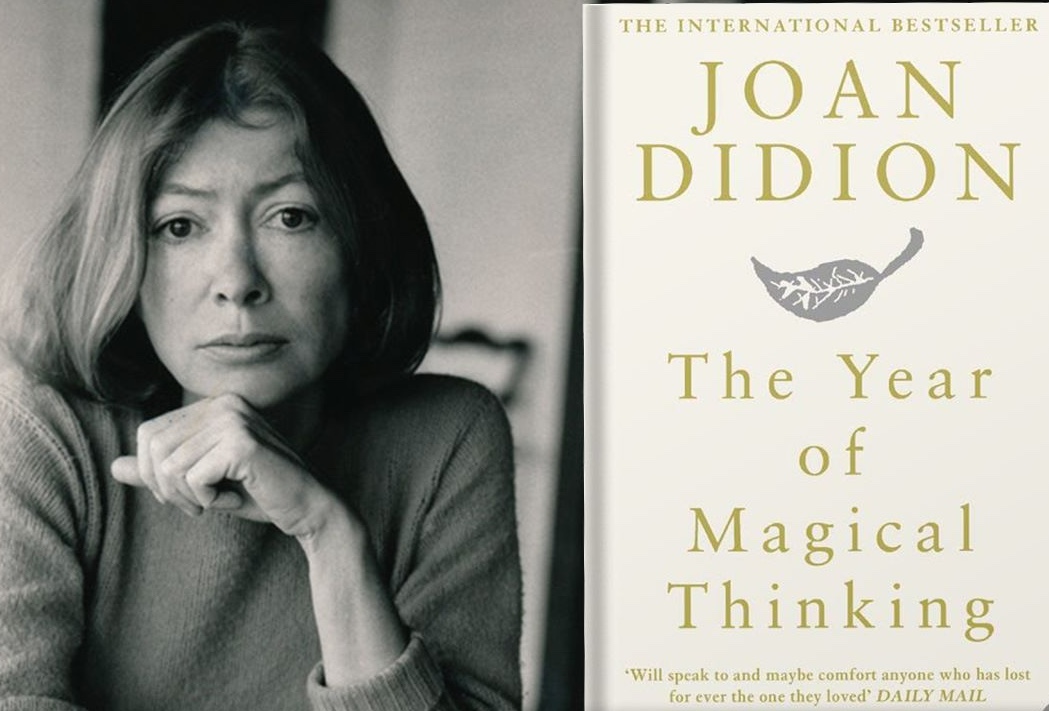
Didion wrote it in the aftermath of her husband’s sudden death; it isn’t a memoir of healing so much as a dissection of loss, precise, restrained, devastating.