Showing posts with label Joan Didion. Show all posts

Tuesday, 22 September 2026

Joan Didion — What if the person the writer is selling out is herself?

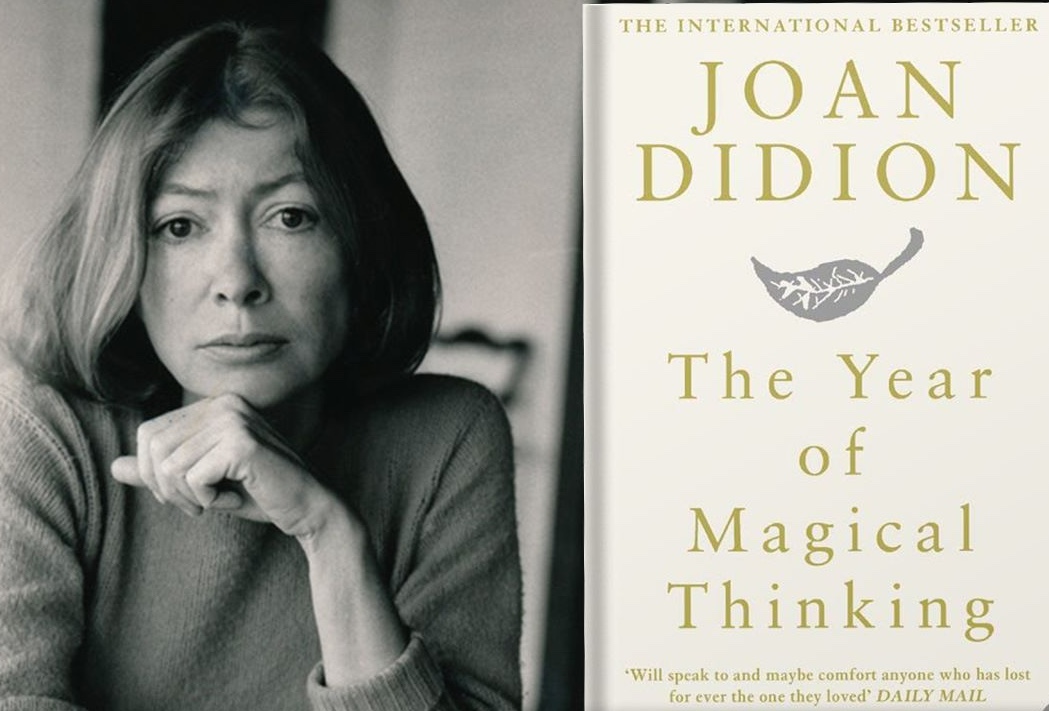
What happens when a writer turns the camera on herself? Joan Didion’s The Year of Magical Thinking asks whether we can trust our own memories.
Joan Didion, The Year of Magical Thinking and what happens when the writer turns the camera on herself

We've been here before. In fact, Joan Didion is where much of this journey began.

In Slouching Towards Bethlehem, she gave us the sentence that has followed us through almost every writer we've encountered since: “Writers are always selling somebody out.”

Thursday, 17 September 2026

Can you write about someone you cannot understand?

Can a writer understand someone who built his life on lies? Emmanuel Carrère’s The Adversary explores Jean-Claude Romand and the limits of nonfiction.
Emmanuel Carrère, The Adversary and what happens when a writer cannot find the explanation

Writers explain things. Even when they don't announce it, it is one of the basic pleasures they offer us. It's why we love to read. They take the mess of experience and give it shape. They decide where a story begins, which details matter, and how one event relates to another. 

In nonfiction especially, we tend to assume that if a writer has spent years researching a person, interviewing people who knew them, and examining the evidence of their life, they will eventually be able to tell us who that person really was. But what happens if they can't? 

Thursday, 10 September 2026

What if you trusted a writer with your story?

The Journalist and the Murderer by Janet Malcolm and Fatal Vision by Joe McGinniss, exploring trust and betrayal in nonfiction
Janet Malcolm, The Journalist and the Murderer and the betrayal at the heart of nonfiction

Imagine spending months talking to a writer. You tell them things you wouldn't normally tell people. They meet your family. They read your letters. They listen sympathetically while you explain the worst thing that has ever happened to you. Eventually, perhaps inevitably, you begin to think this person understands you.

Then the book comes out, and you discover that the writer you thought understood you has turned you into a character you barely recognise.

That is the nightmare sitting at the centre of Janet Malcolm's The Journalist and the Murderer. And after everything we've been reading about writers, truth and the people who become material, I suspect Malcolm is the writer we've been heading towards all along.

Friday, 4 September 2026

Can you tell the truth by making things up?

Can journalism be inaccurate and still tell the truth? Hunter S. Thompson’s Fear and Loathing in Las Vegas tests the limits of fact, fiction and Gonzo journalism.

Hunter S. Thompson, Fear and Loathing in Las Vegas and the strange truth of Gonzo journalism

Here's a question. Can you tell the truth by making things up? Norman Mailer walked into the story and announced himself. Joan Didion sat quietly at the edge of it and watched.

Hunter S. Thompson drove into Las Vegas with a boot full of drugs. At which point the idea of journalistic objectivity was probably in some difficulty.

Friday, 28 August 2026

Joan Didion and Norman Mailer: The literary odd couple

Joan Didion and Norman Mailer seemed like literary opposites. But their New Journalism revealed a shared problem: can a journalist ever truly be objective?
Joan Didion and Norman Mailer do not immediately strike you as two writers who should have had much in common.

Mailer was loud, combative, theatrical and seemingly incapable of entering a room without eventually becoming one of the principal subjects under discussion. He ran for mayor of New York. He got into fights. He appeared on television and argued with people. He wrote about politics, war, sex, boxing and himself, frequently managing to combine several of these subjects at once. Norman Mailer didn't simply have a public persona. At times, Norman Mailer appeared to be the principal character in the ongoing Norman Mailer production. He was always the main character.

Didion was something else entirely. Small, watchful, controlled. Dark glasses, cigarette, notebook. She cultivated the impression of somebody sitting quietly at the edge of the room while everyone else made the potentially catastrophic mistake of forgetting she was there.

Sunday, 23 August 2026

Can a writer ever get out of the way?

Norman Mailer, The Executioner’s Song and what happened after In Cold Blood

Truman Capote had a problem. He was too good a writer.

In In Cold Blood, Capote took the murder of the Clutter family in Kansas and transformed it into literature. He created suspense, reconstructed conversations, moved between perspectives and, most troublingly, made us understand Perry Smith. 

Capote removed himself from the book, but he was everywhere in its choices. He decided where we looked, what we knew and when we knew it.

So after writing about In Cold Blood, I was left with another question. What happens if the writer tries to get out of the way?

Thirteen years after Capote's book appeared, Norman Mailer offered an answer. Sort of.

Sunday, 9 August 2026

Can you ever really trust a writer? Rachel Cusk, Natalie Portman and the dangerous business of becoming somebody’s material

Does Rachel Cusk’s Life of M draw on Natalie Portman? From Truman Capote to Knausgård, what happens when writers turn real people into material?
In the preface to Slouching Towards Bethlehem, Joan Didion leaves us with a warning.

'Writers are always selling somebody out.'

It is a wonderfully typical Didion sentence. It's cold, precise and just self-aware enough to make the betrayal sound almost professional.

Friday, 26 June 2026

Beautiful sentences, difficult people: Can we separate a writer’s style from their reputation?

A literary collection featuring Monsters, The White Album, The Year of Magical Thinking, The Sun Also Rises, Money and The Ballad of Black Tom.
There are writers we admire without reservation. Then there are the others.

The writers whose sentences remain brilliant while their reputations grow increasingly uncomfortable. The writers whose private behaviour, political beliefs or public remarks alter the atmosphere around their books.

A novel or essay once encountered innocently can become harder to read after we learn more about the person who wrote it. The words have not changed, but the reader has.

Sunday, 5 April 2026

Seven Joan Didion quotes that reveal what made her writing so singular

Seven Joan Didion quotes that reveal what made her writing so singular, from her ideas about place and memory to the stories we tell in order to live.
Joan Didion is one of those writers whose lines seem to follow you around. There are lines I have read, then underlined, then found again years later in someone else’s essay, in the margins of a notebook, in the kind of conversation that starts with books and ends somewhere closer to confession.

The danger, of course, is that Didion can become over-quoted and under-read. Her sentences are so clean, so sharp, and so immediately recognisable that they sometimes get flattened into aesthetic objects: elegant, detached, devastating. But the best Joan Didion quotes do much more than sound good. They point to something essential in her work: how she thought about writing, selfhood, memory, control, and the stories people tell in order to survive.

Sunday, 29 March 2026

What makes a distinctive sentence?

A conversational craft essay on what makes a distinctive sentence in fiction, with close examples from great writers and recommended reads woven into the discussion.
There are some writers I can recognise within a paragraph. Occasionally within a line.

Not because they repeat themselves, and not because they are full of obvious flourishes, but because their sentences carry a particular pressure, rhythm, and intelligence. A distinctive sentence is not just decorative. It reveals how a writer sees.

Tuesday, 24 March 2026

The comfort reread, and what it says about your life right now

Open novel with a bookmark and a mug of tea on a soft blanket, suggesting a cosy reread.
I have a small, slightly embarrassing ritual. When I can’t decide what to read next, I reread something I already know. Sometimes it is one chapter. Sometimes it is the whole book, like slipping into a familiar coat that still fits even if I have changed shape in the meantime.

This is the point where the productive part of my brain tries to intervene. You could be reading something new, it hisses. You could be expanding your horizons. You could be… achieving.

Wednesday, 7 January 2026

Reading in the gaps: Why we return to books that broke us

Why We Revisit the Books That Broke Us
There are books we finish and put down, and for a while, we are unable to speak. These are books that pull the air from our lungs. That leave us raw, like skin rubbed thin. And yet, somehow, we return to them.

Not immediately, of course. Often, we need time. Months. Years. Distance to recover from the ache they left behind. But they are on our minds, and the pull is there. Like gravity drawing us back to earth.

Friday, 19 December 2025

Reading in the liminal: The books that hold us between seasons

A cozy reading corner featuring a stack of five books on a wooden shelf: "Blue Nights" by Joan Didion, "Stoner" by John Williams, "Gilead" by Marilynne Robinson, "Outline" by Rachel Cusk, and "Foster" by Claire Keegan. Beside the books are a ceramic mug, reading glasses, and a folded wool blanket, all illuminated by natural light from an adjacent window.
There is a particular kind of reading that feels like standing in a doorway, neither fully in nor fully out.

Not every book asks for deep attention, but some arrive quietly and stay with you longer than expected. They don’t rush to a resolution or pull you along with pace. Instead, they hold space, for a mood, a shift, a moment that hasn't yet found its shape.

Saturday, 15 November 2025

Books that saved my writing: Five under-the-radar titles every writer should read

List of five unexpected, under-the-radar books that offer fresh creative insight and help writers reconnect with language and craft beyond traditional advice.
Not every book that changes your writing shouts about it. Some sneak in sideways, books that don’t always appear on must-read lists but lodge themselves somewhere deep in your process. These aren’t craft manuals. They’re stranger, quieter, more potent than that.

When writers talk about the books that shaped them, it’s usually the big names: Bird by Bird, On Writing, maybe a bit of Joan Didion or George Orwell. But some of the most essential books in a writer’s life aren’t the ones offering advice.

Saturday, 6 September 2025

The annotated life: Why marginalia is back in style

An open book with handwritten notes, underlines, and sticky tabs lining the margins
Marginalia, you either love it or hate it. Once considered the mark of a disrespectful reader, someone scribbling on the pristine pages of novels, marginalia has returned with an unexpected flourish.

Instagram is full of annotated pages, complete with underlines, post-its, and impassioned scribbles. On TikTok, readers film themselves reacting in real time, pen in hand. Even published authors are weighing in, sharing how marginal notes shaped their early reading lives.

Tuesday, 12 August 2025

How to write like Joan Didion

A guide to the joan didion sentence
What makes a Joan Didion sentence unmistakable? It’s not only the vocabulary or the rhythm. It’s the control. The precise needlepoint balance between distance and emotion, between clarity and chaos. Her prose doesn’t shout; it slices.

In her best work, Didion captures a moment so cleanly that the emotional aftermath lingers longer than the reading itself. Consider this line from The Year of Magical Thinking:

"Grief turns out to be a place none of us know until we reach it."

Wednesday, 6 August 2025

Joan Didion’s packing list and the illusion of preparedness

Joan Didion's packing list from the White Album
It’s the holiday season. You’re packing for your trip. There is no better time to revisit this: two skirts. Two jerseys. A bottle of bourbon. This is the famous packing list from The White Album. It is as precise as it is strange. It reads like a ritual, a personal inventory, a whisper of both glamour and dread.

It’s not really about the clothes. It’s about control. About readiness. About who she became when the suitcase clicked shut.

Sunday, 20 July 2025

Grief, grammar, and the Didion sentence: Rereading The Year of Magical Thinking


For me, few books confront grief with the unflinching clarity of Joan Didion's The Year of Magical Thinking. It is one of my favourite of Didion books and I reread it recently. 

Didion wrote it in the aftermath of her husband’s sudden death; it isn’t a memoir of healing so much as a dissection of loss, precise, restrained, devastating. 

Saturday, 5 July 2025

Packing lists and California cool: How Joan Didion made the personal iconic

Before minimalism was a hashtag or lifestyle trend, Joan Didion was living it with elegance and intent. Her now-famous packing list, tucked into The White Album, has become a cultural artefact in its own right—a snapshot of a writer whose personal style was as deliberate as her prose.

Thursday, 12 June 2025

From Sylvia Plath to The Smiths: The ultimate bookish playlist


If you're like me, and you love books and music, you probably get the same unique thrill in hearing a favourite book or author woven into a song lyric. It's like a secret handshake between readers and musicians. Whether it’s a simple name-drop or a full-on homage, these songs remind us that the worlds of music and literature are always in conversation. 

Here are twenty-two songs that celebrate books and writers, featuring artists such as Kate Bush, Vampire Weekend, Nirvana, Radiohead, the Smiths, and Black Star.