
Wednesday, 11 February 2026
10 UK literary agents currently open to fantasy fiction submissions (2026)
Tuesday, 10 February 2026
20 UK literary agents you can submit your novel to right now
 Navigating the UK literary agent scene can feel opaque, but it helps to know who’s out there.
This isn’t a definitive list, but these are twenty respected, active agents known for championing strong literary and commercial fiction.
Monday, 9 February 2026
10 UK literary agents currently open to book club fiction submissions (2026)
 Book club fiction sits in that rich middle ground between literary and commercial.
Saturday, 7 February 2026
After Lonesome Dove: why Cormac McCarthy’s Border Trilogy is the Western to read next

It certainly did for me. It arrives with deceptive ease, settles in slowly, and leaves behind the feeling of having lived another life. Its greatness lies not only in its characters, vast landscape and epic scope, but also in its sense of finality. It says what it needs to say, fully and generously.
Which is precisely why it is best left alone.
Friday, 30 January 2026
Waiting for the winter that never comes: George R. R. Martin, the long delay, and the afterlife of Game of Thrones

Back then, The Winds of Winter seemed just over the horizon. George R. R. Martin had already begun writing it. Some readers expected it within a few years. Many still believed that the books would finish before the show caught up.
That never happened. HBO's Game of Thrones finished almost six years ago, and Martin has now been working on The Winds of Winter for well over a decade.
Tuesday, 27 January 2026
It’s hard to get a literary agent — here’s how to improve your odds

The truth is, the odds are tough. Fewer than 10% of all fiction writers ever secure representation. Yes. You read that correctly. That's how hard it is to find a literary agent.
Saturday, 24 January 2026
Julian Barnes: The six essential reads

It is such a wonderful book, and told in just 150 pages. It has the feel of a much longer novel because it packs so much in. Such a worthy Booker Prize winner.
Wednesday, 21 January 2026
How to tell if an agent is right for your book (not just your dreams)

It’s tempting to say yes immediately, and many do, but not every agent is the right fit. I've been there a couple of times, and for whatever reason, it did not pan out. Here’s how to assess whether they’re not only excited about your book but also aligned with your long-term creative goals.
Monday, 19 January 2026
The call: what happens when a literary agent wants to sign you?

For many writers, it’s thrilling and surreal. It can also be nerve-racking. You should enjoy the moment, and congratulate yourself on the hard work. You have achieved something very few writers do. I certainly did, as it is so hard to get a literary agent, and I think it is getting harder.
Friday, 16 January 2026
How to write a query letter that doesn’t sound desperate

How to write a query letter that doesn’t sound desperate
Query letters walk a tightrope. Too humble and you undersell the work. Too bold and you risk sounding like you’ve written the next Ulysses.
The trick is to find a voice that reflects your book’s tone while presenting yourself as a professional, not a hopeful.
The literary middle: Loving books that don't go viral

There’s nothing wrong with loving a popular book. The best ones resonate for a reason. But in all the noise, it can be hard to hear the quieter voices. The books that didn’t land on a major award shortlist or trend on BookTok, but still left something behind in you.
Friday, 9 January 2026
How to find a literary agent: five honest steps for fiction writers
 Finding a literary agent can feel like trying to catch the attention of a stranger in a crowded room, while whispering. There’s mystique, gatekeeping, and a mountain of mixed advice. But the process isn’t as impenetrable as it seems. Here’s a grounded guide to finding a literary agen t in five real steps.
Wednesday, 7 January 2026
Reading in the gaps: Why we return to books that broke us

Not immediately, of course. Often, we need time. Months. Years. Distance to recover from the ache they left behind. But they are on our minds, and the pull is there. Like gravity drawing us back to earth.
Sunday, 28 December 2025
Novels I didn’t finish, and why that’s OK

For a long time, I treated unfinished books as a personal shortcoming. If I didn’t connect, I assumed the problem was attention, patience, or effort. That I hadn’t tried hard enough. But reading is not a moral exercise. It’s a relationship, and like most relationships, it’s shaped by timing, mood, expectation, and capacity.
Friday, 19 December 2025
Reading in the liminal: The books that hold us between seasons

Not every book asks for deep attention, but some arrive quietly and stay with you longer than expected. They don’t rush to a resolution or pull you along with pace. Instead, they hold space, for a mood, a shift, a moment that hasn't yet found its shape.
Wednesday, 10 December 2025
The waiting game: Why Donna Tartt’s silence is part of the myth

It is a peculiar kind of fame: literary, elusive, enduring. And it begs the question—how has Tartt managed to become one of the most recognisable cult authors of our time by doing, ostensibly, so little?
Monday, 8 December 2025
The death of genre? Why writers are dismantling old labels

But something is shifting. Writers are slipping past those borders, and readers are following them. In fact, they’re relishing the trespass. Literary novels are embracing dragons and time travel. Crime writers are reaching for unreliable narrators and experimental prose. Romance authors are crafting love stories that refuse tidy arcs. In 2025, the lines feel not so much blurred as beside the point.
Thursday, 27 November 2025
Rejection letters as literature: The best (and worst) no's in publishing history

Vladimir Nabokov, Sylvia Plath, and George Orwell were all rejected with varying degrees of disdain, confusion, or complete indifference. It reminds us that the taste-making machinery of publishing is imperfect, and that a firm "no" isn’t always the final answer.
Wednesday, 19 November 2025
Why does every bestseller sound the same? A mini manifesto against beige prose

This is beige prose, smooth, flavourless, and engineered for mass readability. It’s not bad writing, exactly. In fact, that’s the problem. It’s technically correct, but soulfully inert. A style that’s been edited within an inch of meaning. Every sentence feels like it’s been test-marketed, stripped of friction, and dunked in lukewarm relatability.
Saturday, 15 November 2025
Books that saved my writing: Five under-the-radar titles every writer should read
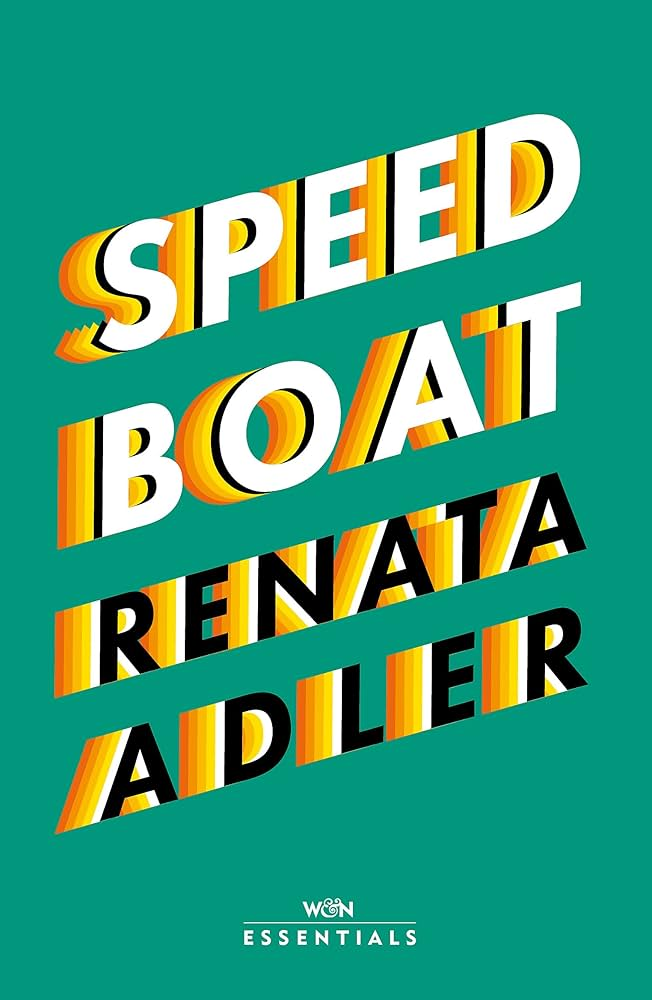
When writers talk about the books that shaped them, it’s usually the big names: Bird by Bird, On Writing, maybe a bit of Joan Didion or George Orwell. But some of the most essential books in a writer’s life aren’t the ones offering advice.
Subscribe to:
Comments (Atom)