Friday, 21 February 2025

There are no New plots: And that’s a good thing

Lee Child has now written 29 Jack Reacher novels and he famously says there are no new plots

As writers, we often hear the dreaded phrase: "Every story has already been told." It’s the kind of thought that can stop creativity in its tracks. 

However, Lee Child, the author of the Jack Reacher series (29 books and counting), sees it differently. He argues that originality doesn’t come from plot. It comes from execution.

This isn’t a problem. It’s a liberation.

Thursday, 20 February 2025

Six novels that demonstrate why “show, don’t tell” is worth getting right


When I wrote about “The art of showing, not telling” recently, I realised how many great examples of this technique exist in literature. Some authors take it to the next level, showing us emotions, relationships, and tension in ways that draw entirely us into the story without a single line of “telling.” 

I thought it might be useful to look at a few of these standout examples and the writers who have mastered the art of showing so well that their stories linger long after you’ve finished reading.

Monday, 17 February 2025

How to nail the crucial first five pages of your novel


I recently wrote about books that can help with style and craft when writing your novel, and now I want to look at those crucial first five pages. 

When it comes to capturing the attention of a literary agent, these opening pages are make-or-break territory. 

Wednesday, 12 February 2025

Dialogue that does double duty: How to advance plot and reveal character

Dialogue isn’t just there to make characters sound like they’re speaking. It’s one of the most powerful


tools in a novelist’s kit. The right line of dialogue can move the story forward, deepen a character’s personality, and sometimes even hint at future conflicts. 

When your dialogue serves multiple purposes, it pulls more weight, making your prose more efficient and engaging. Here are four well-known literary examples of how you can achieve this.

Tuesday, 11 February 2025

The art of showing, not telling: Crafting novels readers can’t put down


I've struggled with this one without knowing and have been guilty of too much telling. 

“Show, don’t tell” is one of the oldest pieces of writing advice, but what does it mean? At its core, it encourages readers to experience the story through the characters’ actions, words, and emotions instead of simply being told what to think. 

This approach makes the difference between feeling immersed in the narrative and feeling as though you’re merely reading a summary.

Monday, 10 February 2025

How to develop character backstories that bring your novel to life

Every character, even those that appear briefly, benefits from a backstory. Understanding their past not


only aids in writing them more convincingly—it also makes them feel more real, both to you and your readers. This doesn’t imply cramming pages of history into the novel, but possessing a profound understanding of their origins will manifest in subtle, impactful ways.

Friday, 7 February 2025

7 books that will help you write your novel


When I started writing, I honestly didn’t believe I could learn anything. I just sat down at my laptop, put words on the page, and wrote. No courses, advice or anything. 

In retrospect, that sounds crazy; why would you start a new project without reading about it?

Monday, 3 February 2025

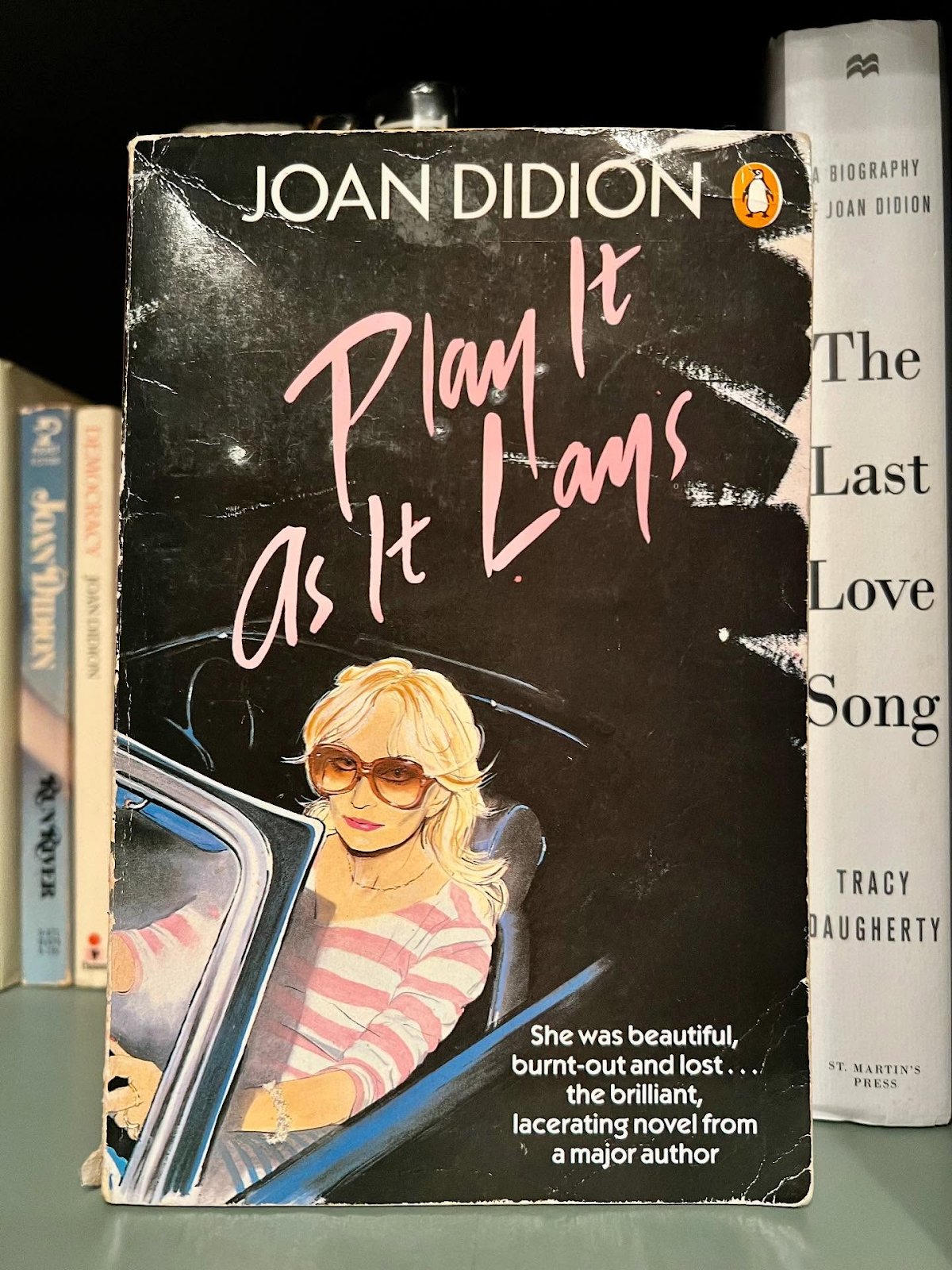
Notes to John by Joan Didion


I am a huge fan of Joan Didion so this is an unexpected book treat. A new book from the much missed Joan Didion.

Sunday, 2 February 2025

Five ways to create unforgettable characters

Hercule Poirot, Agatha Christie’s brilliant detective, who combines a sharp, logical mind with a meticulous obsession over his appearance, particularly his iconic moustache.   His quirks make him stand out in a genre crowded with other sleuths. As Poirot once says in Death on the Nile:

When I think back to the characters that have stuck with me, long after I’ve closed the book, it’s not just their roles in the story that come to mind. It’s their quirks, their unique voices, and the way they seem so vividly alive. 


Creating truly memorable characters isn’t about making them flawless or heroic; it’s about giving them details, contradictions, and depth that resonate with readers. I've thought about this a lot and put together this list of 5 effective ways to create memorable characters in your writing that you might find useful when writing your novel.


Saturday, 1 February 2025

Stream-of-consciousness in novel writing: what it is and why it matters


Stream-of-consciousness writing has always fascinated me when it comes to writing novels. It can
 dive into the intricate flow of thoughts and emotions that feel unique and personal. 

Stream-of-consciousness might initially sound daunting and a bit trippy, but anyone can experiment with it.

Monday, 27 January 2025

Writing your novel: How to find your unique style

Every novelist has a unique fingerprint, a way of telling stories that sets them apart. This is your writing style, your voice. 

It's what connects you to your readers and makes your novels memorable. But how do you find it? These tips that look at finding your voice and consistency are key to getting there.

Wednesday, 15 January 2025

The 7 types of bookshelves and what it says about you


Our bookshelves provide an intimate portrait of who we are. It’s why people love a Shelfie. It's also why the so-called ‘bookshelf wealth’ trend has grown. We all have books we are proud to show, and some we might tuck away.

Apparently, there are seven common bookshelf types, ranging from the meticulous alphabetical bookshelf to the creative and eye-catching colour-coded shelf, and what each says about the people behind them.

Sunday, 12 January 2025

Richard Price on Writing: The Art of Building a World One Detail at a Time

Richard Price has long been known for his razor-sharp dialogue and immersive storytelling, whether in novels like Clockers or in his work on The Wire

In a recent interview with The Guardian, he reflected on his process—deeply rooted in observation, research, and an unwavering commitment to authenticity.

Thursday, 2 January 2025

The Young V&A Bookshop


The Young V&A
 is an inspirational, active, and fun place for kids (and adults). 

It is brilliantly curated and designed in every corner. Better still, it has a friendly little bookshop, where I came across these rather lovely-looking editions today.

Monday, 9 December 2024

Rereading Generation X by Douglas Coupland

For the past week or so, I’ve been rereading Generation X by Douglas Coupland. I first picked it up years ago, and I’ve always remembered it as a sharp, funny, and strangely moving portrait of a very specific cultural moment. But this time around, I wanted to see if it still held up, and honestly, it’s just as brilliant as I remembered.

Yes, it’s called Generation X, but its wit, originality, and storytelling cut across generational lines. Coupland coined a term and captured a mood, a sense of drift, irony, and uncertainty, that feels just as relevant today, even if the cultural backdrop has shifted. The book manages to be both a time capsule and eerily prescient.

Thursday, 14 November 2024

The brilliance of Susie Steiner's novels


I discovered this late, but I have to share how good the late Susie Steiner's Manon Bradshaw books are. They are so worth your time.

Thursday, 31 October 2024

The new bookshelves are finished


It’s taken a long time, but finally, books are out of the loft and up on the new bookshelves. Reading chair also very comfy.

It makes me very happy to have these bookshelves. I now need to start organising my bookshelves into an actual system.

Wednesday, 25 September 2024


I've always loved this Ernest Hemingway, quote from On Writing:

"My aim is to put down on paper what I see and what I feel in the best and simplest way."

A reminder that great writing doesn’t have to be overcomplicated. Clarity, truth, and emotional impact often come from simplicity—not from forcing complexity.

Whether you're writing fiction, essays, or anything in between, focus on saying what matters in the best and simplest way.

Wednesday, 28 August 2024

Can ChaptGPT to find you a literary agent?

I asked ChatGPT to find me a literary agent. Although it couldn't accomplish this task, I found its four tips on finding a literary agent worth sharing. 

1. Research Literary Agents: Use literary agency databases, sites, and directories to find agents specialising in romance and comedy genres. Websites like the acknowledgements section of rom-com novels are similar to yours. Authors often thank their agents, providing you with potential names to research. 

Saturday, 10 August 2024

Kate Atkinson on writing: Creativity, craft, and connecting with readers


Kate Atkinson talking about her books and her writing

I’m a huge fan of Kate Atkinson, and
The Guardian recently ran a great piece on her writing process. She discusses the blend of spontaneity and meticulousness that defines her career—one that has given us Life After Life, the Jackson Brodie series, and so much more.